
5 Hand Positions for Safe Driving
When it comes to getting behind the wheel, where to place hands on the steering wheel is simply not on the forefront of most motorists. According to driver safety research, having our hands in certain positions can prevent considerable injury if an accident were to occur.
10 and 2 o’clock
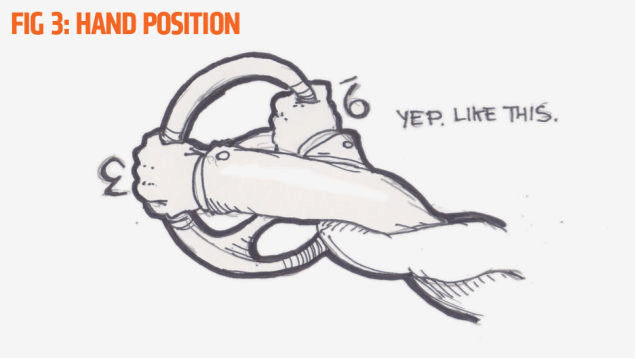
This is the hand position most of us were taught in driver’s education, right? Well, recent studies show that it is no longer the safest. This is due to air bag installation now being mandatory in new vehicles. They can deploy at 100-200mph, (which has saved an estimated 18,000 lives) but positioning at 10 and 2 leaves the hands and arms in the crossfire should an airbag need to deploy, and the driver at risk of arm and wrist injuries, as well as injuries to the face. So instead of limiting your hand and wrist accessories in fear of them one day imprinting themselves on your face, just retrain your brain that 9 and 3 is the safer place for your hands on the steering wheel. This position also allows your elbows to be slightly bent thereby giving you more control of the vehicle, and the ability to sit 10 inches from the airbag and slightly reclined, the recommended safety distance and body position by smartmotorist.com. Some car companies are even the making the top of steering wheel less comfortable to hold onto to help us avoid grabbing for it.
Thumbs
Yes, even your thumbs should be positioned correctly to avoid injury. Studies show that having your thumb straight and upright on the steering wheel is safer than tucking them around the wheel and gripping. Should an accident occur, this is to prevent from dislocating your thumb, causing meta-carpal-phalangeal (MCP), or worse case scenario, amputation.
Push/Pull Turning a.k.a. Hand-to-Hand
Never cross your hands on the steering wheel while driving. The most common time for crossing your arms would be while making a turn. Even though this might seem most natural and easiest, it leaves the driver vulnerable. Reason being, while crossing there is only one hand on the wheel when there should always be two for better control, and should an accident occur, you now have crossed arms when the airbag deploys, which may cause more injury to the upper body and limbs. The safer form of making a turn is the Push/Pull method. This method allows both hands to remain on the wheel without crossing over each other, while keeping the hands lower on the wheel and out of harms way. Wayne Tully, CEO of National Driver Training, explains how exactly to perform this method: When using hand-to-hand steering to turn, the left hand grasps the wheel between 7 and 8 o’clock and the right hand grasps the wheel between 4 and 5 o’clock. Depending on the direction of the turn, the right or left hand pushes the wheel up and the opposite hand slides up, grasps the wheel and pulls down to continue the turn but you never bring your hands above the 11 and 1 position. While the pulling hand moves down, the hand that initially pushed up slides back toward its original position to make adjustments as needed. Simply reverse the modified hand-to-hand process to bring the vehicle onto your intended path.
One handed
This is a position that is only allowed when driving in reverse, so that you can turn your neck to see behind the vehicle, or when shifting gears. Otherwise, experts say that having two hands on the wheel, whatever the position is safer than one. Sorry, no more phones, lattes, or applying make-up in the car.
Hands on Hub or Horn
This is a position that is only allowed when driving in reverse, so that you can turn your neck to see behind the vehicle, or when shifting gears. Otherwise, experts say that having two hands on the wheel, whatever the position is safer than one. Sorry, no more phones, lattes, or applying make-up in the car.